Kit you cannot see from the path
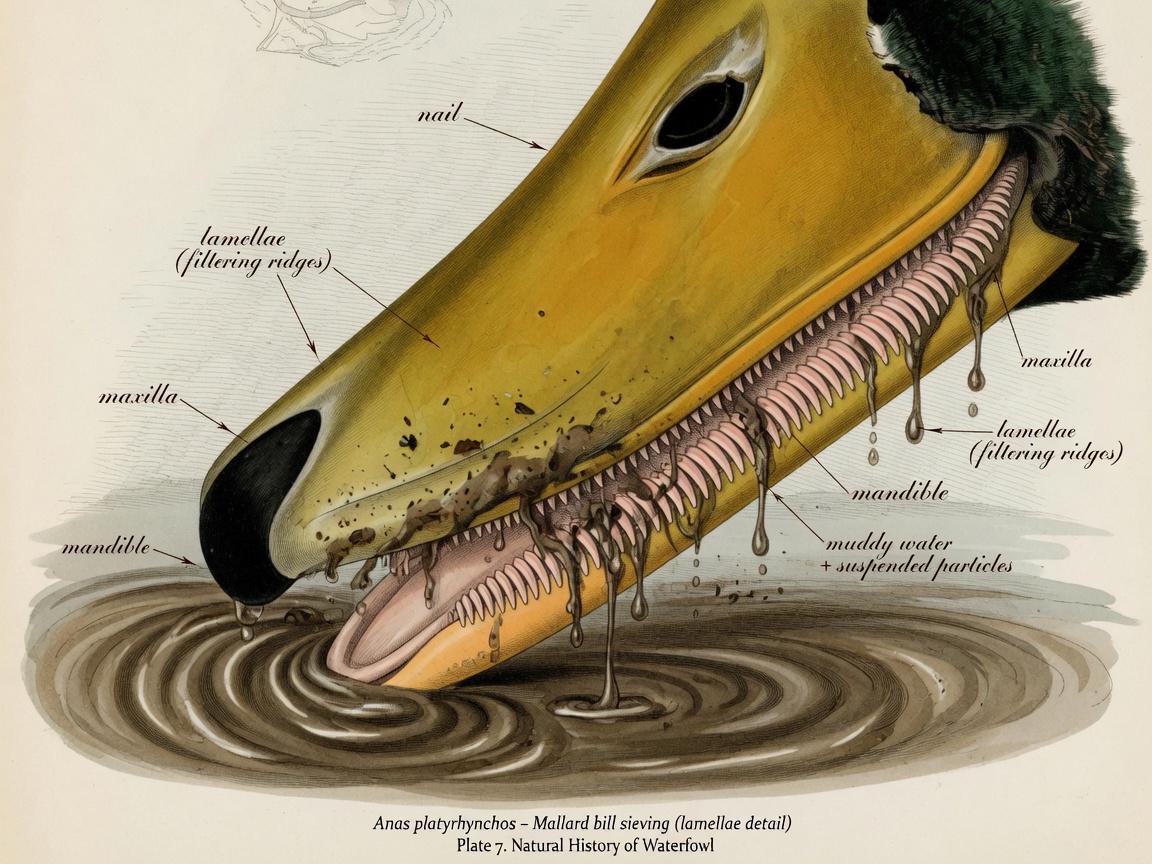
Ducks carry a comb inside the bill. Lamellae strain muddy water so seeds and insects stay and the rest goes out. A shoveler is the extreme version: a spoon with a finer mesh.
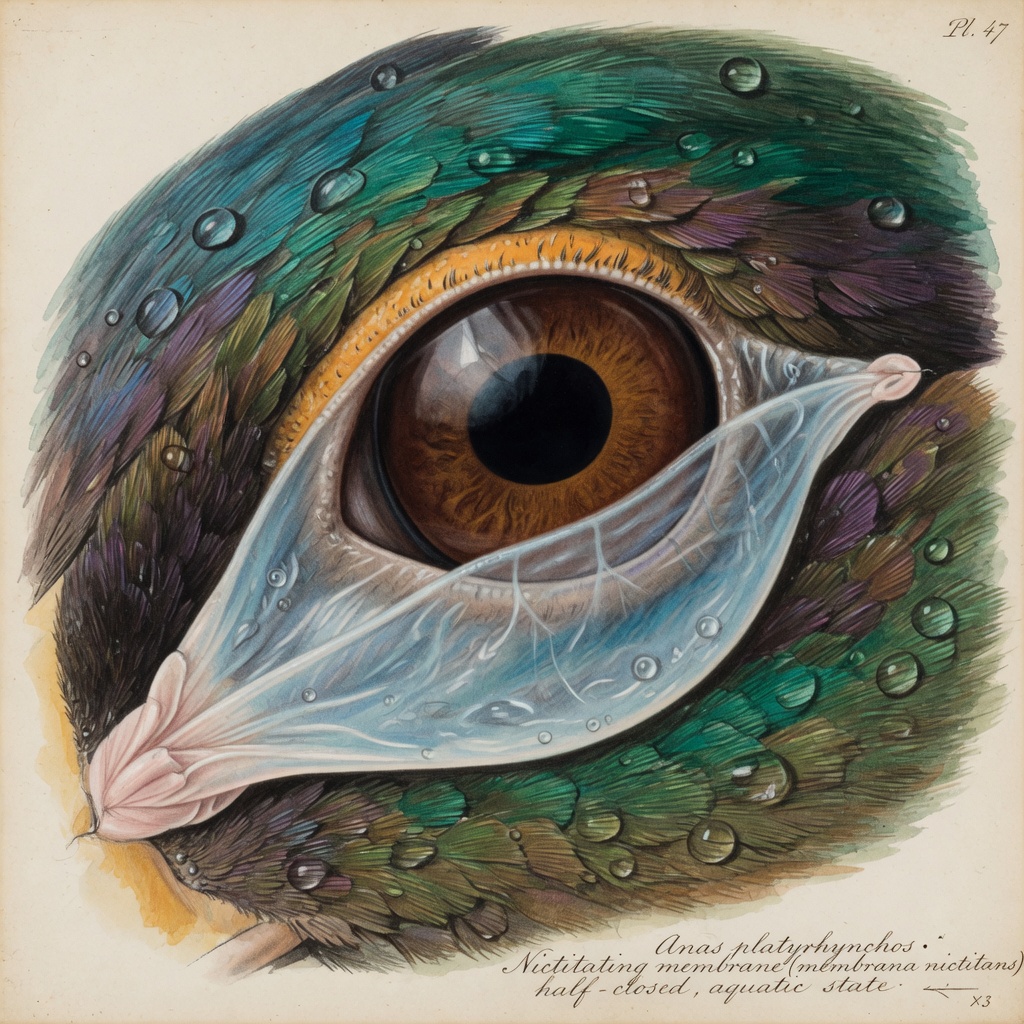
They also have a third eyelid, a translucent nictitating membrane that works like a swimming goggle. Eyes sit on the sides of the head, so the field of view is huge — close to a full circle, with a small blind spot behind. That is why a bird on the towpath seems to notice you before you have decided to be interesting.
Waterproofing is not a coating they are born with and forget. Oil from the preen gland near the tail has to be spread through the feathers. A duck that cannot preen gets wet, then cold.
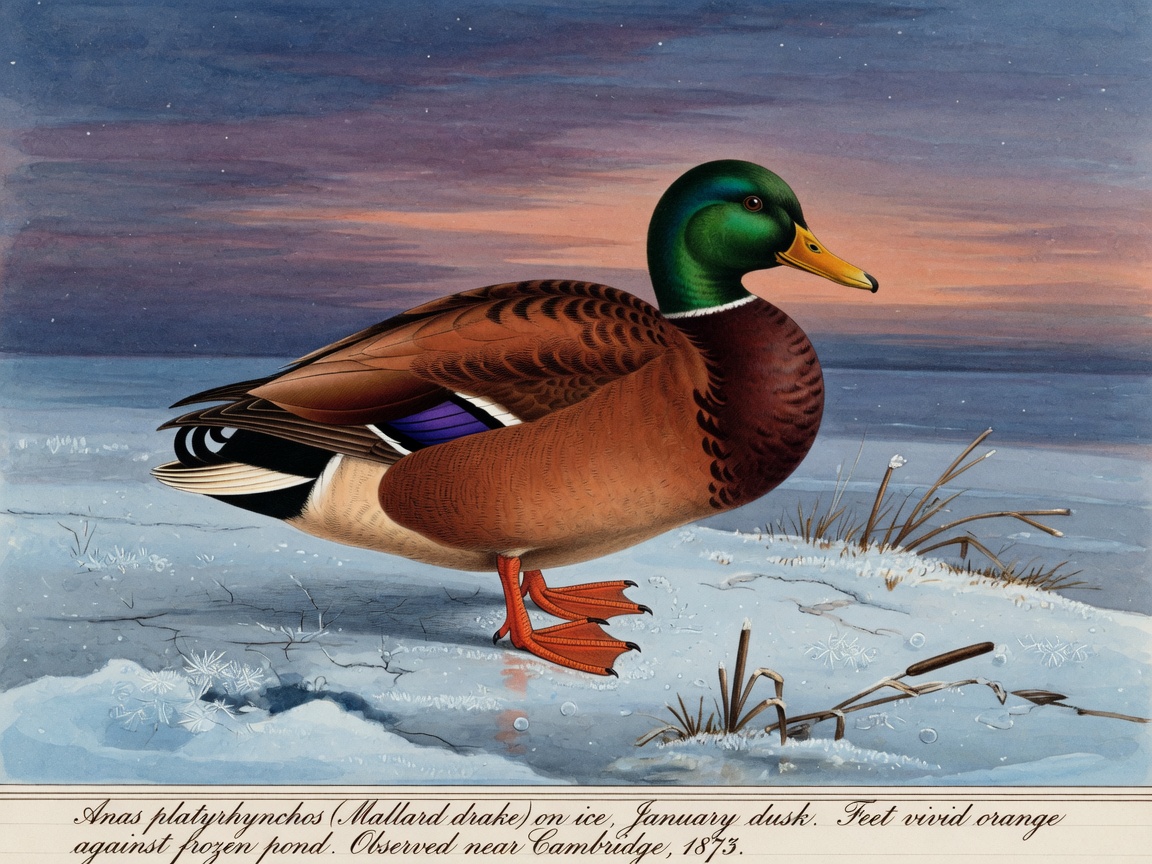
Feet look reckless on ice because they are allowed to. Warm blood going down the legs heats the cold blood coming back up — a counter-current exchanger — so the body keeps its heat and the feet sit near water temperature. They still have nerves. They are not plastic toys.
Habits that look like personality
The loud park quack is usually the female. Drakes rasp, whistle, or burp according to species. If you have only ever heard “quack”, you have been listening to one sex.
Some ducks sleep with one eye open. Half the brain rests; the other half keeps a watch. On a raft of birds in the dark, the outer ones are more likely to keep that eye on the world.
Ducklings imprint on the first large moving object they see. That is almost always the female. If people scoop the brood “to help”, the chicks may follow a boot instead of a bird. Leave a crossing family the pavement. Call a licensed rehabilitator if they are actually stuck.
After breeding, many drakes drop their flight feathers at once and hide in dull eclipse plumage. An August mallard that looks moth-eaten is not dying. It cannot fly for a few weeks. Give it the reeds.
Size, speed, and a long life
There are roughly 120 living duck species. They miss Antarctica, and that is about it.
The cotton pygmy-goose is among the smallest, around 26 cm. The common eider is a different animal: up to about 70 cm and a couple of kilograms of mussel-diving muscle. Long-tailed ducks are famous divers; they regularly go tens of metres down, which is why they belong on cold sea, not a park lake.
Same word, different animal
Length, not weight. An eider is also a mussel-diver with a different job to a park mallard.
A mallard can move at motorway speeds in level flight. Red-breasted mergansers have been timed even faster. Wild ducks often live five to ten years if they are lucky; a few marked birds have gone far longer in care.
Mallards are the ancestors of almost every farm duck. The Muscovy is the loud exception: a different species, a hiss instead of a quack, and a face that looks armoured.
Myths that will not die
A duck’s quack does echo. The idea that it does not was a pub fact for years. Acousticians at the University of Salford recorded quacks in an echo chamber in 2003 and heard the echo just fine. It is simply easy to miss because the call is a short, similar-sounding burst.
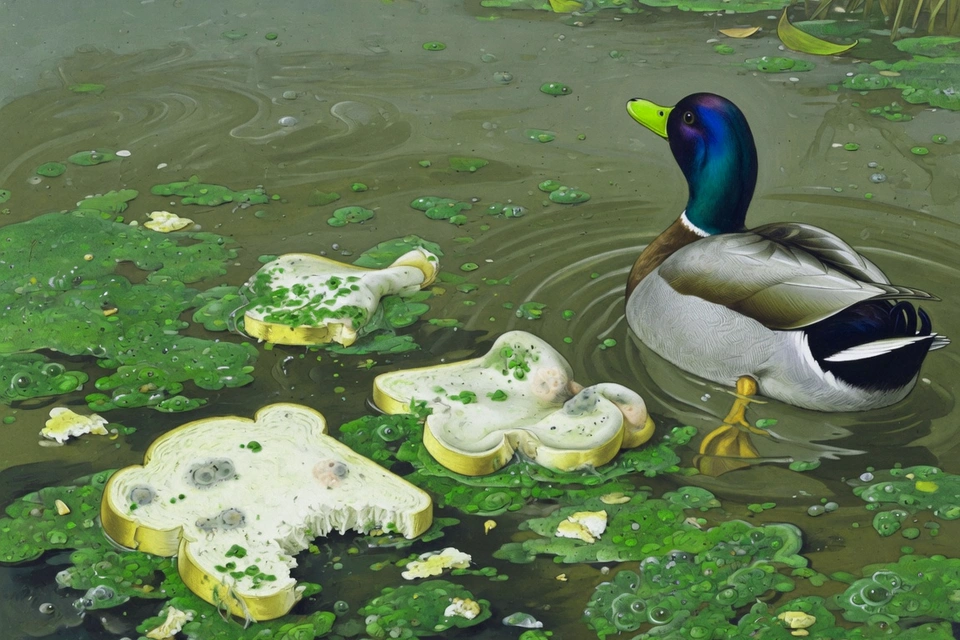
Bread is not a kindness. It is starch and salt. Young birds stuffed on crusts can develop angel wing, a wrist deformity that ends flight. Uneaten slices rot and feed algal blooms. Peas, oats, or nothing are the actual options. The feeding page is the short version.
Ducks do not “have no blood in their feet”. They have a clever radiator. The difference matters if you want the true fact to stick.
The rubber ducks that mapped the ocean
In January 1992 a container of bath toys washed off a ship in the North Pacific. Thousands of yellow ducks, plus beavers, frogs and turtles, went overboard. Oceanographers, especially Curtis Ebbesmeyer, used the landings to test models of currents. The toys turned up in Alaska, Hawaii, and, years later, on Atlantic beaches.
That accident taught more about the sea than most gift-shop ducks ever will. The birds on your local water are still the better show. Take binoculars. Leave the loaf at home. A yellow rubber duck on a desk is a joke with a current model attached; the wild bird is still the point.